


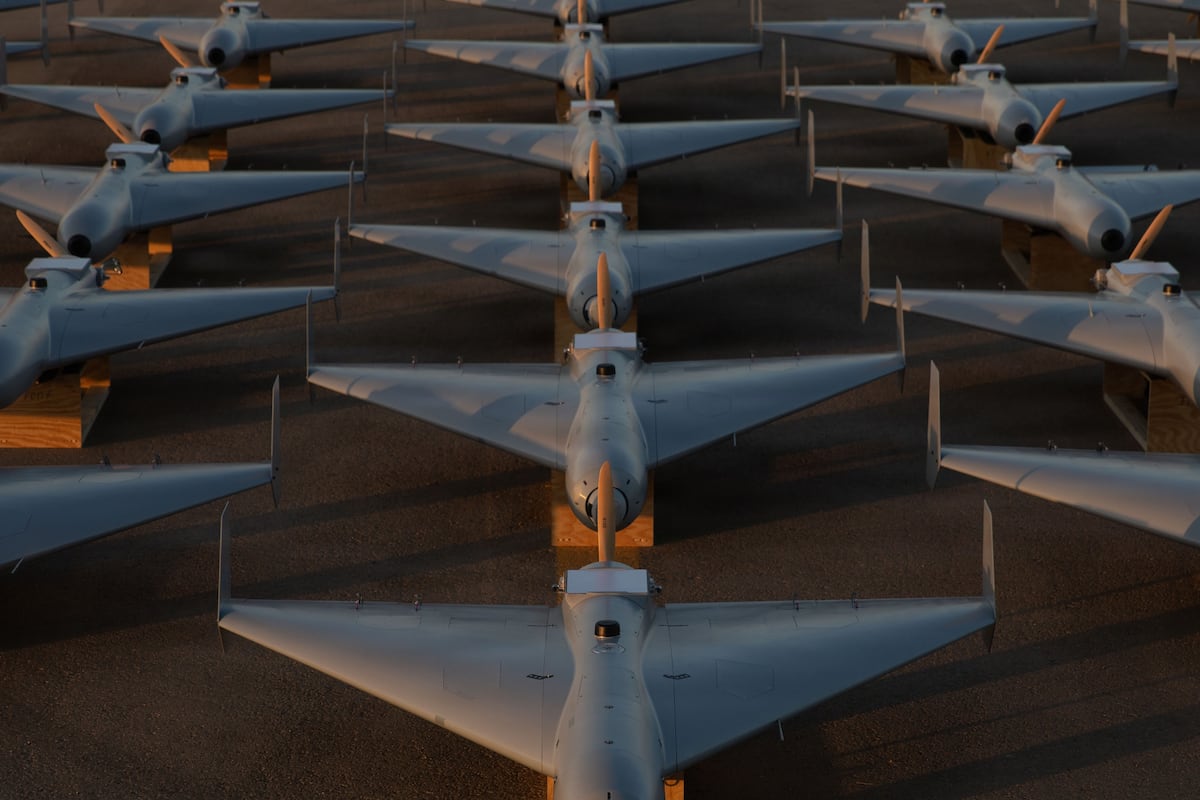
Unleashing the Dawn of Autonomous Warfare: U.S. Airstrikes Mark the Debut of LUCAS
In a groundbreaking move, U.S. Central Command (CENTCOM) officials confirmed that airstrikes targeting Iran this past Saturday marked the first combat deployment of the U.S. military’s new autonomous kamikaze drone—the Low-cost Unmanned Combat Attack System (LUCAS). This operation, dubbed Operation Epic Fury, specifically targeted facilities belonging to the Islamic Revolutionary Guard Corps (IRGC), focusing on command and control centers, air defense systems, missile and drone launch sites, and military airfields.
Adm. Brad Cooper, the commander of CENTCOM, remarked on the audacity of the President’s directive, stating, “Our brave soldiers, sailors, airmen, Marines, guardians, and Coast Guardsmen are answering the call.” This declaration highlights the strategic commitment of the U.S. military in leveraging innovative technologies in modern warfare.
The Technology Behind LUCAS
The LUCAS drone is a significant leap forward in combat technology, boasting capabilities that redefine operational tactics. This one-way attack system was reverse-engineered from Iran’s Shahed-136, showcasing the ingenuity of U.S. defense contractors like SpektreWorks, based in Arizona. The drone incorporates multiple launch methods, including catapults and rocket-assisted takeoffs, offering versatility for varied combat scenarios.
Originally derived from the company’s FLM 136 target model, LUCAS was designed to simulate the Iranian drone variant for counter-drone training. With a range of approximately 500 miles and a maximum payload capacity of 40 pounds—roughly double the explosive yield of a Hellfire missile—LUCAS is notably lighter than its Iranian counterparts. Priced around $35,000, its cost-effectiveness and scalability make it an attractive option for the U.S. arsenal, capable of delivering significant firepower without breaking the bank.
Recent Demonstrations and Tactical Developments
The operational capacity of LUCAS was underscored during a successful test launch from the Independence-class littoral combat ship, the USS Santa Barbara, in December. This exercise took place in the Arabian Gulf, marking a critical step in integrating the drone into real-world military operations. Additionally, the establishment of Task Force Scorpion Strike—a pioneering one-way attack drone squadron—led by U.S. Special Operations Command-Central personnel, reflects a decisive pivot towards utilizing innovative drone technologies.
Adm. Cooper emphasized the importance of this new task force: “This new task force sets the conditions for using innovation as a deterrent.” The swift deployment of such advanced drone capabilities is intended to fortify U.S. military strength and deter adversarial actions, further emphasizing the strategic value of autonomous systems in current military doctrine.
Strategic Shift in Military Acquisition
This shift towards autonomous warfare is not merely a technological novelty; it is encapsulated by Defense Secretary Pete Hegseth’s directive to accelerate the acquisition and deployment of affordable autonomous systems across the military branches. Hegseth has spotlighted the necessity of overcoming bureaucratic hurdles that often delay the integration of cutting-edge technologies into combat training. He stressed the critical need for senior officers to adapt to the rapidly changing dynamics of modern battlefields, ensuring the U.S. military remains adept and responsive.
Geographic Significance of Operations
The operational scope of U.S. Central Command spans approximately 2.5 million square miles, encompassing strategic maritime regions like the Arabian Gulf, Gulf of Oman, Red Sea, and segments of the Indian Ocean. This vast area positions the U.S. military strategically for both current engagements and potential future confrontations, underscoring the importance of maintaining technological superiority in the region.
In summary, the debut of the LUCAS drone marks a pivotal moment in military technology and strategy. The integration of autonomous systems paired with a focus on rapid deployment suggests a future where innovation and adaptability reign supreme on the modern battlefield.