


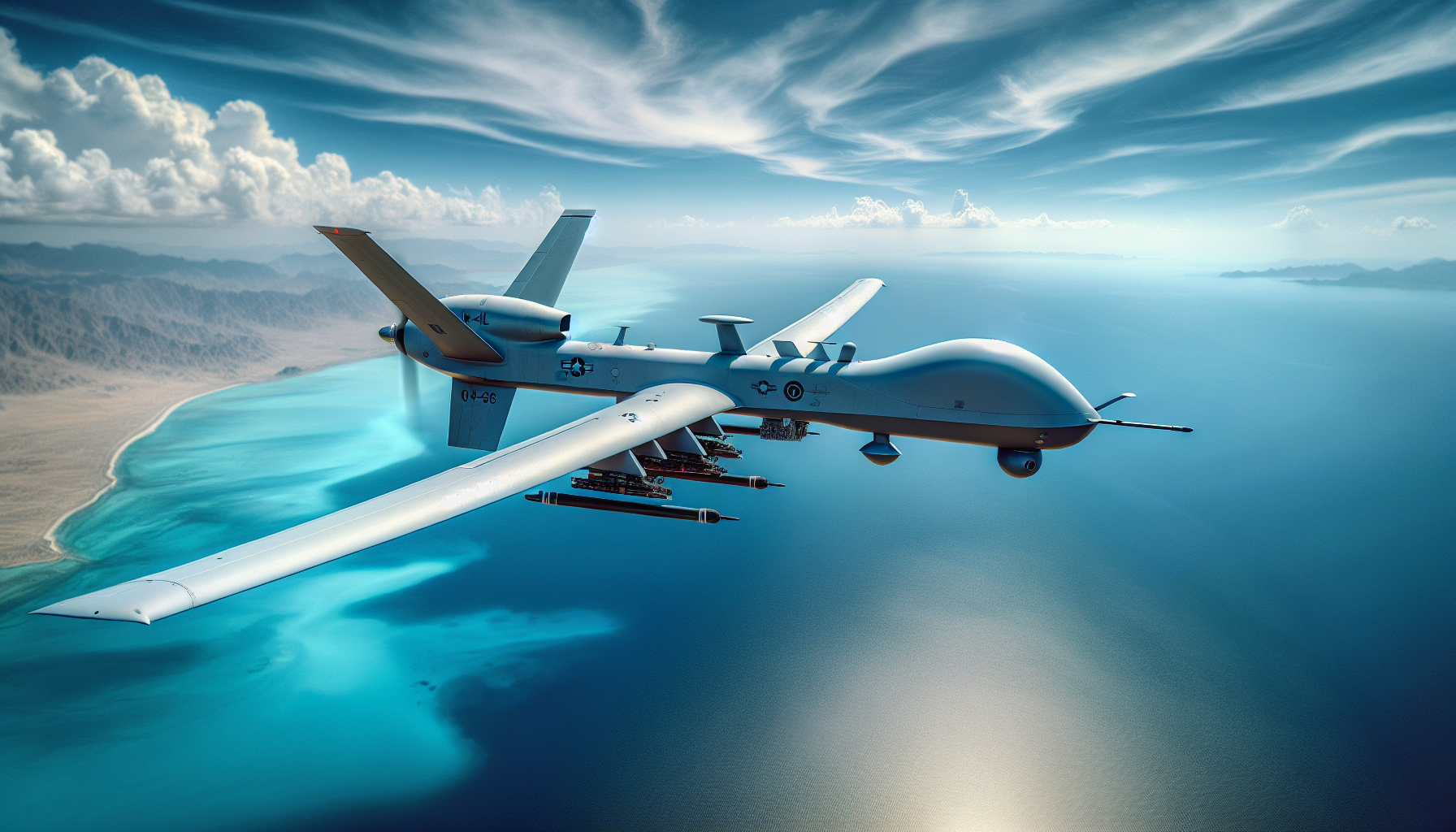
Open-source Flight Tracking: A U.S. Navy MQ-4C Triton Operation in the Gulf of Oman
On February 26, 2026, open-source flight-tracking data revealed a significant mission undertaken by a U.S. Navy MQ-4C Triton drone. The aircraft conducted an extended high-altitude surveillance operation over the Gulf of Oman, shortly after departing from the United Arab Emirates. This mission unfolded amidst renewed tensions between the United States and Iran, particularly concerning maritime security dynamics near the Strait of Hormuz.
Context of the Mission
The flight came at a time when maritime relations were under strain, as U.S.-Iran tensions escalated. The Strait of Hormuz is a strategic waterway through which a substantial portion of the world’s oil supply passes. Thus, any increase in American intelligence-gathering activity in this area is laden with operational and political significance. Although the U.S. Navy did not formally confirm the mission, the outlined flight pattern reflects traditional intelligence, surveillance, and reconnaissance (ISR) operations aimed at bolstering situational awareness during heightened regional tensions.
Flight Details and Operations
According to the flight-tracking data, the MQ-4C established a long-dwelling orbit in international airspace above the Gulf of Oman, very close to Iran’s southeastern coastline. This operational profile is typical for High-Altitude Long-Endurance (HALE) missions. The drone maintained altitude well above most tactical threats, executing extended “racetrack” patterns to maximize time on station and sensor effectiveness.
Interestingly, two P-8A Poseidon maritime patrol aircraft were also airborne in the region, indicating a coordinated ISR strategy that employed multiple platforms. This layered approach enhances maritime domain awareness throughout the Gulf of Oman, the Strait of Hormuz, and the Persian Gulf—areas that regularly experience fluctuations during U.S.-Iran tensions.
The MQ-4C Triton: A Purpose-Built Asset
The MQ-4C Triton is specifically designed for expansive surveillance missions. Derived from the RQ-4 Global Hawk, it is a state-of-the-art drone equipped for broad-area maritime surveillance. With a capacity to operate above 50,000 feet for over 24 hours, the Triton can cover vast ocean areas while staying clear of short-range surface-to-air threats.
This drone is portrayed as a key ISR asset for the U.S. Navy, capable of supplying crucial data to both fleet and joint force commanders. Featuring advanced sensors and data integration capabilities, it plays a vital role in supporting operational objectives without replacing crewed aircraft.
Sophistication of Sensors
The strength of the MQ-4C Triton lies not merely in its aerodynamic capabilities, but in its sophisticated sensor suite. The drone is equipped with the AN/ZPY-3 Multi-Function Active Sensor (MFAS), an X-band radar system optimized for wide-area maritime surveillance. This radar allows for synthetic aperture imaging and detailed classification of maritime contacts, enhanced by additional sensors like electro-optical/infrared (EO/IR) systems and signals intelligence (SIGINT) payloads.
Together, these components facilitate an intricate recognized maritime picture, enabling real-time tracking of vessels and identification of anomalies. This level of detail supports both indications-and-warning (I&W) functions and broader joint targeting processes.
Interactions with P-8A Poseidon Aircraft
The concurrent presence of P-8A Poseidon aircraft alongside the MQ-4C demonstrates a deliberate operational synergy. While the Triton offers persistent aerial surveillance, the P-8A can rapidly engage targets for visual identification or anti-submarine warfare (ASW) tasks. This integration is pivotal for executing modern maritime ISR operations, allowing U.S. commanders to optimally allocate assets in response to rapidly evolving threats.
Potential Objectives of the Mission
The primary goals of the MQ-4C’s sortie likely centered around maritime security and I&W while possibly aiding in preliminary target development. By observing surface traffic patterns and IRGC Navy activities, the Triton helps build a current electronic and visual understanding of critical areas, especially near sensitive coastal military sites and missile facilities.
This constant situational refresh allows analysts to detect deviations from established norms, such as changes in missile readiness, naval movements, or air defense adjustments. In doing so, the mission reinforces deterrence strategies while enabling quicker and more informed decision-making.
Broader Implications of U.S. Surveillance Efforts
The presence of the MQ-4C Triton in the Gulf is emblematic of the United States’ commitment to maintaining comprehensive maritime domain awareness in one of the world’s key energy corridors. For U.S. allies, persistent HALE ISR coverage signals a commitment to upholding international navigation rights and deterring aggressive actions from adversaries.
However, this engagement is not without complexities. Regional political sensitivities exist, particularly regarding Iranian views on foreign military installations. Iranian officials have repeatedly suggested that such bases could become targets in any potential conflict. In this light, high-altitude missions serve dual purposes as both operational tools and strategic signals in the ongoing geopolitical chess match.
Surveillance as a Balancing Act
At this stage, the MQ-4C Triton’s flight over the Gulf of Oman is best viewed as an assertion of U.S. surveillance capabilities rather than a prelude to major military action. The mission aligns with longstanding practices of using high-end, unarmed ISR capabilities to enhance situational awareness and strategic options while employing diplomatic avenues simultaneously.
The dynamic environment of the Gulf where rapid maritime misjudgments can escalate quickly underscores the importance of sustained ISR operations. They signal to allies and adversaries alike that the United States remains vigilant, proactive in defending its interests, and adept at managing escalating situations through enhanced awareness.
Written by Teoman S. Nicanci – Defense Analyst, Army Recognition Group.